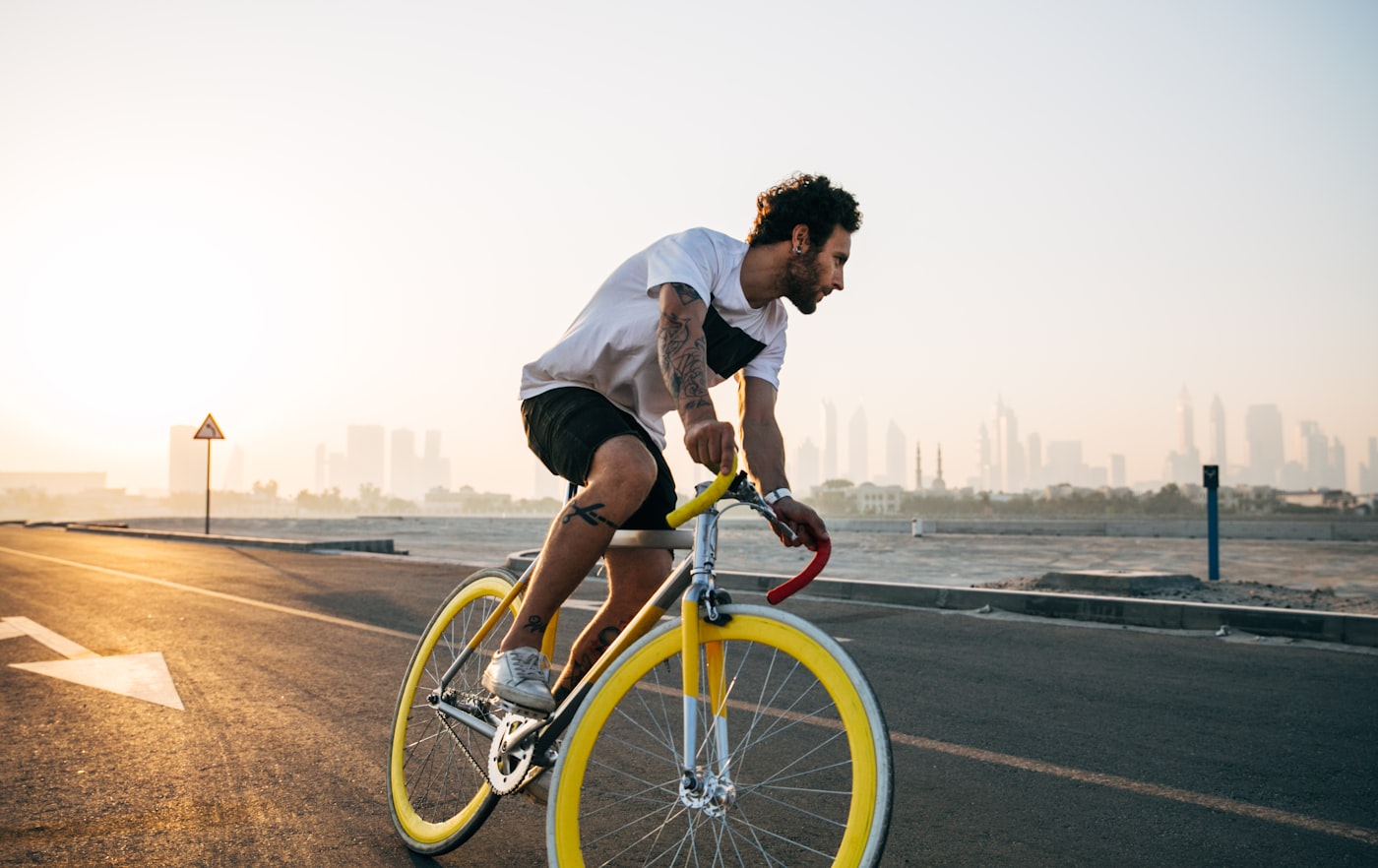
Short answer: A complete cycle with no motor is HS 8712.00. A cycle fitted with an electric motor for propulsion — every pedal-assist e-bike included — is 8711.60, a subheading created for that purpose in the HS 2017 revision. Parts for both share heading 8714: 8714.91 frames and forks, 8714.92 rims and spokes, 8714.93 hubs and freewheel sprockets, 8714.94 brakes, 8714.95 saddles, 8714.96 pedals and crank-gear, 8714.99 other. A spare lithium-ion battery shipped separately is 8507.60. Those six digits are identical worldwide; digits 7 to 10 are national and set your duty.
What is the difference between HS 8712 and HS 8711.60?
Heading 8712.00 reads "bicycles and other cycles (including delivery tricycles), not motorised". One line covers the whole muscle-powered range — city, mountain, road, folding, kids', fat, cruiser, BMX, touring, tandem, cargo trikes — provided only the rider propels them.
Subheading 8711.60 sits inside the motorcycle heading and covers cycles fitted with an electric motor for propulsion. It entered the nomenclature with the HS 2017 amendments because administrations had been splitting e-bikes between 8711.90 and 8712. The position is settled: if an electric motor drives the cycle it is 8711.60, pedal-assist or throttle, whatever your road-traffic law calls a bicycle.
That fork sets everything downstream: the duty rate, whether anti-dumping measures bite, which standard applies (EN ISO 4210 and EN ISO 8098 versus EN 15194, UL 2849 and UL 2271), and whether UN 38.3 battery paperwork travels with the goods.
Where do bicycle and e-bike parts sit in the tariff?
Heading 8714 is "parts and accessories of vehicles of headings 8711 to 8713", so the same subheadings serve conventional bicycles and e-bikes alike: a fork is 8714.91 either way. Subdivisions follow the component — 8714.91 frames and forks, 8714.92 rims and spokes, 8714.93 hubs and free-wheel sprocket-wheels, 8714.94 brakes including hub brakes, 8714.95 saddles, 8714.96 pedals and crank-gear, 8714.99 for handlebars, seat posts, derailleurs, mudguards and carriers.
The trap is assuming everything in the carton is 8714. Several high-volume items go by material or function instead:
| Item | HS code | Why it sits there |
| Complete cycle, no motor | 8712.00 | Includes delivery and cargo tricycles |
| E-bike, complete | 8711.60 | Electric motor for propulsion, since HS 2017 |
| New pneumatic tyres | 4011.50 | Rubber chapter, not a cycle part |
| Inner tubes | 4013.20 | Rubber chapter, own subheading |
| Roller chain | 7315.11 | Chain of iron or steel |
| Spare lithium-ion battery, alone | 8507.60 | Accumulator; UN 38.3 summary required |
| Lighting sets for cycles | 8512.10 | Electrical lighting equipment |
| Cycling helmets | 6506.10 | Safety headgear, not an accessory |
How far do the first six digits actually take you?
Under the WCO Harmonized System the first six digits are identical in every member economy, so 8712.00 in China is 8712.00 in Chile. After that, nomenclatures diverge: the EU adds two digits for the 8-digit Combined Nomenclature and two more for the 10-digit TARIC, where anti-dumping measures live; the US uses a 10-digit HTSUS; the UK its own.
Your supplier's export declaration therefore carries a Chinese 10-digit code of which only the first six matter to your entry. Copied whole onto an EU or US declaration it is invalid, and a broker guessing the last four digits is the commonest misclassification we see.
What physical criteria split the national subheadings?
National subdivisions are drawn on measurable features, so the invoice must describe the goods, not just name them. The EU Combined Nomenclature splits 8712.00 by whether the cycle is fitted with ball bearings — state it explicitly. The US HTSUS subdivides by wheel diameter, above or below 63.5 cm, then by declared value bands within certain wheel-size categories.
For 8711.60, customs looks for continuous rated motor power in watts, battery watt-hours, nominal voltage, the cut-out speed for assistance, and whether a throttle works without pedalling. We print these on every e-bike invoice, with the HS code and the Incoterm — EXW, FOB, CIF or DDP.
How do I get a legally binding classification before I ship?
A forwarder's opinion is no defence at audit. Three jurisdictions issue rulings that bind customs:
- EU — Binding Tariff Information (BTI), filed through the EU Customs Trader Portal, valid three years and binding on every member state.
- US — CBP binding ruling under 19 CFR Part 177. Electronic requests are typically answered within about 30 days, and issued rulings are searchable in CROSS — check there first for a near-identical bike.
- UK — Advance Tariff Ruling (ATaR), also valid three years.
Support it with a technical file — motor rating, battery watt-hours, wheel diameter, bearing type, drawings — filed 60-90 days before your first shipment.
What happens if an e-bike is declared as 8712?
It gets found. Post-clearance audit reaches back three years in the EU and UK, and US entries stay open to reassessment long after release. The importer of record pays back duty, interest and penalties, and where anti-dumping measures attach to the correct code the recalculated liability can dwarf the original entry. An 8712 declaration filed with a UN 38.3 test summary also tells the auditor everything.
Frequently asked questions
What is the HS code for an electric bicycle imported from China?
8711.60 at the six-digit level, for any cycle fitted with an electric motor for propulsion, pedal-assist included. You then need the full national code: CN plus TARIC in the EU, HTSUS in the US, the 10-digit tariff in the UK.
Do e-bike parts use heading 8714 or heading 8711?
8714, which covers parts and accessories of vehicles of headings 8711 to 8713. The same subheadings serve conventional and electric cycles alike — a frame is 8714.91 either way. Motor, controller and battery are exceptions, classified in Chapter 85.
What HS code applies to a spare lithium-ion battery?
8507.60, as an electric accumulator, when the battery ships separately from the bicycle. It moves as UN 3480 dangerous goods with a UN 38.3 test summary and compliant packaging. A battery fitted to a complete e-bike is covered by the 8711.60 declaration and travels as UN 3171.
Can I use the HS code my Chinese supplier prints on the export documents?
Only the first six digits. China's export declaration uses a national 10-digit code whose last four digits mean nothing in the EU, US or UK tariff. Take the six-digit heading as your starting point and let your broker complete the rest.
Can one container carry goods under several HS codes?
Yes. A single entry can list many HS lines — bikes under 8712.00, e-bikes under 8711.60, frames under 8714.91, tyres under 4011.50 — each with its own quantity and value. Model MOQs still apply: 25-50 units for e-bikes, 50-150 city, 100-250 kids'.
How long is an advance tariff ruling valid?
Three years in the EU and the UK, unless the nomenclature changes or the ruling is revoked. US binding rulings have no fixed expiry but can be modified or revoked by CBP with notice. All three cover only goods identical to those described.
Get the code right before the container is booked
Classification follows what the goods physically are, so it starts at the specification, not the port. Send us your model list and we will return the six-digit headings and the attributes each national tariff asks you to declare — see our importer guide.
