Short answer: With standard China export packing — one bicycle per carton, roughly 85% pre-assembled — a 20ft GP container holds about 120-140 adult bicycles, a 40ft GP about 220-260, and a 40ft HC about 250-300. Volume is the binding constraint, not weight: an adult bike carton is around 0.22 CBM but only 15-18 kg gross, so the box cubes out long before it approaches its 28,000 kg payload. Deeper knocked-down packing — front wheel, pedals and saddle removed, handlebars turned — adds roughly 30-40% more units, paid for in assembly labour at destination.
What are the real internal dimensions of a 20ft, 40ft and 40ft HC container?
Container names describe the outside. You load the inside, where corrugated walls, floor thickness and the door frame take centimetres out of every direction. These are the working figures for a stuffing plan.
| Container | Internal L x W x H | Nominal cube | Usable cube at 85-90% | Max payload |
| 20ft GP | 5.90 x 2.35 x 2.39 m | about 33 CBM | 28-30 CBM | around 28,000 kg |
| 40ft GP | 12.03 x 2.35 x 2.39 m | about 67 CBM | 57-60 CBM | around 28,800 kg |
| 40ft HC | 12.03 x 2.35 x 2.69 m | about 76 CBM | 65-68 CBM | around 28,800 kg |
A high cube adds 30 cm of internal height for almost no extra freight cost per CBM — for bicycles, roughly one more tier of cartons laid flat. Experienced bike importers therefore book 40ft HC by default.
How much cube does one boxed bicycle actually take?
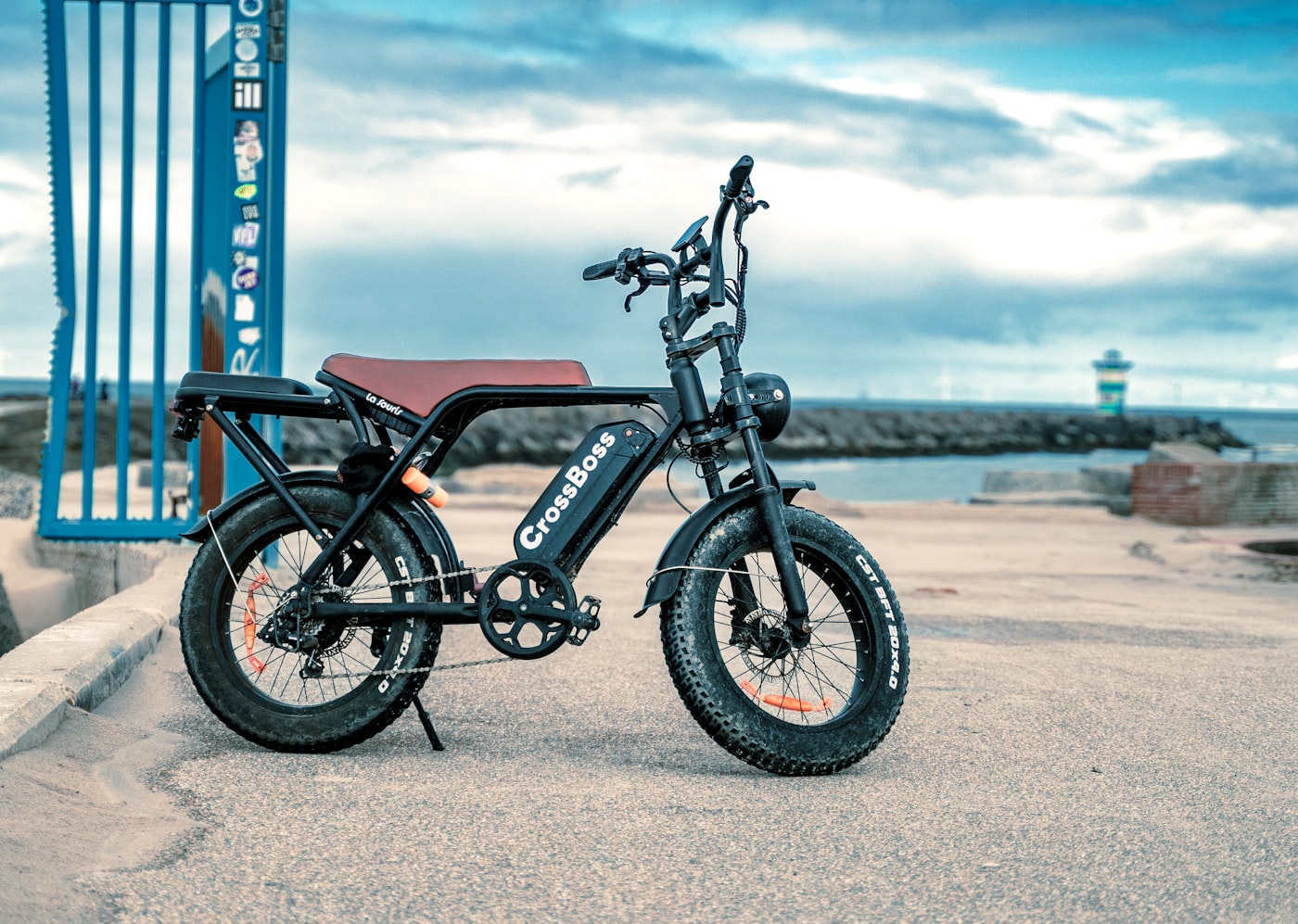
A standard export carton for an adult 26in or 700c bicycle measures roughly 1400 x 200 x 800 mm, about 0.22 CBM — the unit of account for the whole calculation. Smaller wheels fall away fast: a 20in folding bike is typically 0.10-0.14 CBM, a 16in kids bike 0.09-0.12 CBM. An e-bike carton runs 0.30-0.35 CBM because the frame is bulkier and the battery is packed inside.
Divide usable cube by carton cube and you have the load. Apply 85-90% utilisation, never 100% — volume is lost to door-end voids, dunnage, mixed carton heights and hand stacking.
| Bike type | Carton cube | 20ft GP | 40ft GP | 40ft HC | MOQ (units) |
| City / commuter 700c | about 0.22 CBM | 120-140 | 220-260 | 250-300 | 50-150 |
| Mountain 27.5in / 29in | 0.22-0.24 CBM | 115-135 | 210-250 | 240-290 | 50-100 |
| Road 700c | 0.20-0.22 CBM | 125-145 | 230-270 | 260-310 | 25-75 |
| Folding 20in | 0.10-0.14 CBM | 210-290 | 400-560 | 450-640 | 50-100 |
| Kids 16in | 0.09-0.12 CBM | 240-320 | 460-620 | 540-720 | 100-250 |
| E-bike | 0.30-0.35 CBM | 80-95 | 155-185 | 175-210 | 25-50 |
Why do bicycle containers always cube out before they weigh out?
Run the weight column and it is obvious. Three hundred adult cartons at 15-18 kg gross come to roughly 4.5-5.4 tonnes in a 40ft HC, against a payload near 28,800 kg — under a fifth of the legal limit. Bicycles are low-density cargo: you buy air-space, and every centimetre of unused height is money already paid.
E-bikes are the one exception moving toward the weight line, at 30-40 kg gross per carton including the battery. They also carry stowage limits: lithium batteries are UN 3171 or UN 3480/3481 dangerous goods, need a UN 38.3 test summary, and many carriers allow them only in specific vessel positions on a limited weekly allocation. Book e-bike containers early.
Does knocked-down packing really add 30-40% more bikes?
Yes, and the trade-off sits entirely at destination. Standard China export packing is one bike per carton at roughly 85% assembly: rear wheel, drivetrain, brakes and cables fitted and adjusted at the factory, leaving the receiving warehouse to fit handlebar, front wheel, pedals and saddle — 10-15 minutes per unit for a trained technician.
Deeper knocked-down (KD) packing takes the front wheel out of the carton profile, drops pedals and saddle into void space and turns the handlebar, so the carton loses height and depth. An adult carton can compress toward 0.15-0.17 CBM and add roughly 30-40% more units per container. The freight saving is real; the cost is 25-40 minutes of skilled labour per bicycle plus a torque check at your end. KD pays off with your own assembly line, rarely when you drop-ship to dealers.
How should mixed-model loads be planned?
Build a stuffing plan with CBM per SKU before the purchase order is confirmed, not after the goods are ready. Multiply each model's carton cube by the intended quantity, check the total against 28-30 CBM for a 20ft or 65-68 CBM for a 40ft HC, then adjust quantities within each category's MOQ: city 50-150, mountain 50-100, folding 50-100, kids 100-250, e-bikes 25-50, road 25-75.
That is how a first order becomes a full container instead of an LCL part load; the sequencing is set out in our importer guide. A typical starter mix in one 40ft HC might combine 120 city bikes, 60 mountain bikes and 150 kids bikes, with spare parts cartons filling the door-end void.
How do you prove what was actually loaded?
A packing list is a claim; a container loading report is evidence. Before the doors are sealed, a third-party inspector should record the carton count and seal number and photograph the empty container, the stuffing in progress, the final tier and the closed doors with the seal visible.
File it with the invoice, packing list, bill of lading and certificate of origin. Declare bicycles under HS 8712.00 and e-bikes under HS 8711.60, and confirm market compliance before shipment: EN ISO 4210 for adult bicycles, EN ISO 8098 for children's bicycles, EN 15194 for EPAC e-bikes in the EU and UK, CPSC 16 CFR 1512 for the United States, and UL 2849 or UL 2271 where a North American buyer requires it.
Frequently asked questions
How many bicycles fit in a 20ft container?
Roughly 120-140 boxed adult bicycles, based on about 29 CBM of usable cube and a carton of about 0.22 CBM. Folding bikes reach 210-290 units and 16in kids bikes 240-320 in the same box. E-bikes drop to about 80-95 because the carton is 0.30-0.35 CBM.
How many bicycles fit in a 40ft HC container?
About 250-300 assembled adult bicycles in standard export cartons, using 65-68 CBM of usable volume. The extra 30 cm of internal height over a 40ft GP is worth around 40-50 additional adult units. Kids and folding bikes go far higher, to roughly 720 and 640 units.
Is it cheaper to ship bicycles assembled or knocked down?
Knocked-down packing lowers freight per unit by fitting roughly 30-40% more bicycles into the same container, but adds 25-40 minutes of assembly per bike at destination. It suits importers with their own assembly capacity. Standard 85% assembled packing suits bikes going straight to dealers.
Do bicycle containers ever hit the weight limit?
Conventional bicycles never reach it. At 15-18 kg gross per adult carton, even a fully cubed 40ft HC lands near 5 tonnes against a payload of about 28,800 kg. Only e-bike loads approach the limit, and those are constrained first by dangerous-goods stowage rules rather than tonnage.
Can I mix different bike models in one container?
Yes, and most first orders should. Combine models until the total CBM fills the container, respecting each category's MOQ — city 50-150, mountain 50-100, folding 50-100, kids 100-250 units. Ask your supplier for a stuffing plan with CBM per SKU before confirming the order.
What HS codes and Incoterms apply to a bicycle container?
Bicycles fall under HS 8712.00 and electric bicycles under HS 8711.60, subject to your own customs ruling. Most first-time importers buy FOB from a Chinese port to control the ocean leg, while EXW suits buyers with their own China forwarder and CIF or DDP those wanting a landed solution. Fix the Incoterm in writing on the proforma invoice.
Plan the container before you place the order
Capacity, MOQ and packing method are one decision, not three. Send us your model list and target quantities and we will return a stuffing plan with CBM per SKU, a recommended container type and both assembled and knocked-down options — start from our bicycle catalogue.
