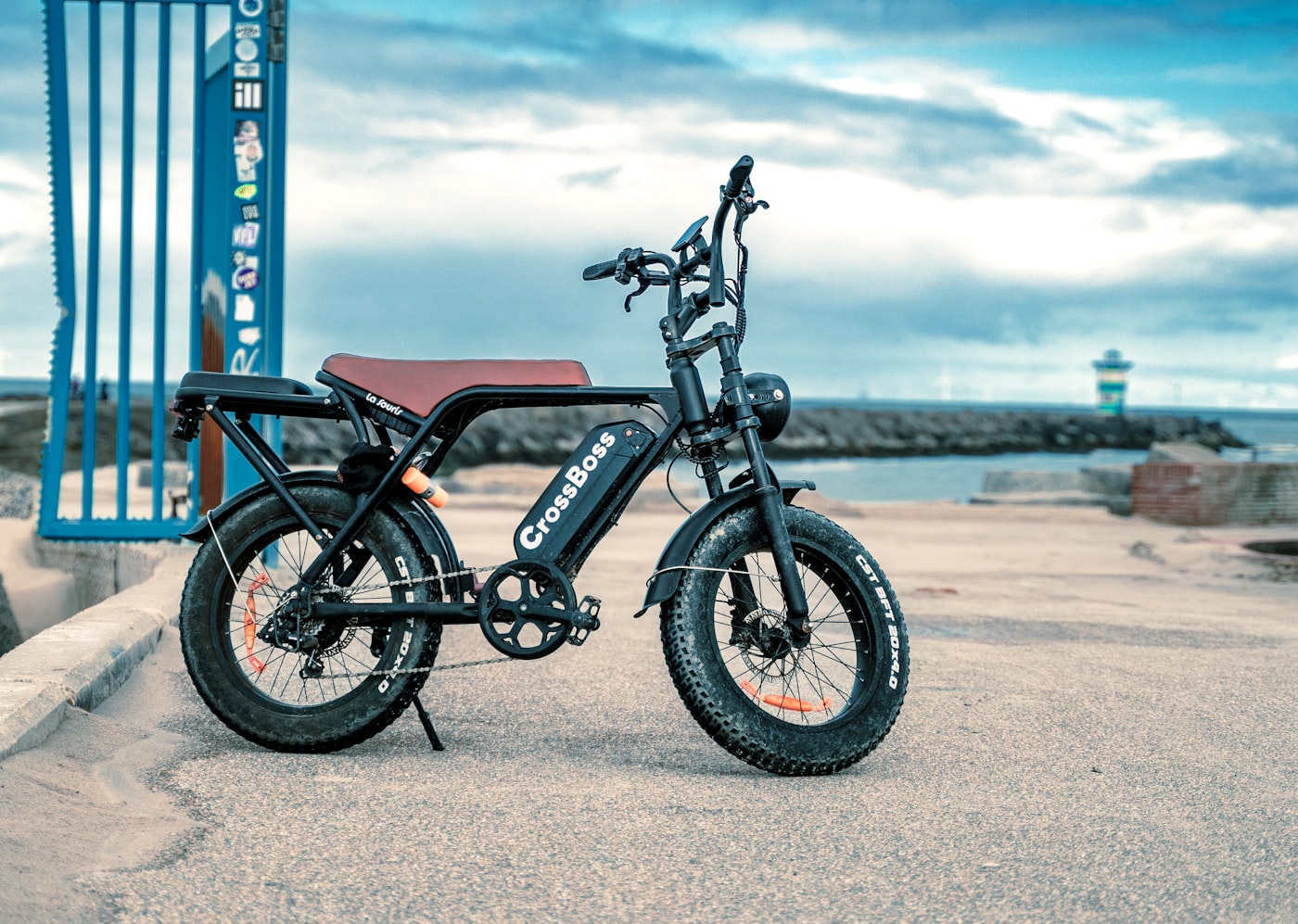
Electric bikes are no longer a secondary product within the bicycle industry; they have become a primary engine of growth in export markets around the world. With rising fuel prices, tightening urban environmental regulations, and growing consumer awareness of clean-mobility options, demand for electric bikes is now growing faster than for their conventional counterparts. For importers and wholesalers, this shift represents a clear commercial opportunity, but it requires a precise understanding of the product's nature, its components, and the supply chain tied to it before entering the market.
The Growth of the Electric Bike Market
The growth of this sector feeds on multiple factors where economic, environmental, and regulatory considerations intersect. Among the most prominent drivers the importer feels directly in demand volume:
- Sustainable-mobility policies: many governments encourage replacing conventional vehicles with low-emission transport, sometimes through purchase incentives or exemptions.
- A widening user base: the electric bike is no longer the preserve of sports enthusiasts; it has entered delivery, logistics services, and daily commuting within cities.
- Improving technology and falling cost: advances in batteries and motors have raised performance and lowered the final price, widening the segment of customers able to buy.
Together, these factors make the electric bike a product with a higher profit margin and greater added value than the conventional bike, which reflects positively on wholesalers' catalogs.
Types of Motors and Batteries
A proper understanding of the product begins with its two core components: the motor and the battery, since they determine performance, price, and the target customer segment.
Motor Types
- Hub motor: mounted inside a front or rear wheel, it is economical and simple to maintain, and suits city bikes and budget categories.
- Mid-drive motor: placed at the pedal axle, it delivers better balance and higher performance on inclines, and is the preferred choice for mountain bikes and premium categories.
Battery Types
Today, Lithium-ion batteries are the prevailing standard for their light weight and long life. When evaluating any offer, it is important to review the battery capacity (in watt-hours), the expected number of charge cycles, and the presence of a battery management system (BMS) that protects against overheating and overcharging. Battery quality reflects directly on return rates and end-customer satisfaction.
Import and Shipping Considerations
Importing electric bikes requires more precise planning than conventional bikes because of their technical nature and the presence of the battery within the shipment. Here are the most important practical points:
- Minimum order quantity (MOQ): usually starts at around 100 bikes per model, with greater flexibility in OEM and ODM models.
- Production lead time: often ranges between 25 and 35 days depending on order size and the degree of customization.
- Sea freight: the voyage usually takes between 20 and 35 days, and you can choose a full container (FCL) for large quantities or consolidated freight (LCL) for smaller orders.
- Commercial terms: the price is agreed on FOB or CIF terms according to the transport and insurance arrangements you prefer.
- Certifications and compliance: make sure CE, ISO 4210, and EN 15194 are available for the bike, along with the UN38.3 certificate for transporting batteries by air and sea, as it is an essential condition for customs clearance in many markets.
It is also advisable to consider partially knocked-down (SKD) or completely knocked-down (CKD) shipping options when there are customs advantages to local assembly, since they reduce duties and increase storage flexibility.
After-Sales Service and Spare Parts
The real success factor in the electric-bike business doesn't stop at the first sale; it extends to your ability to support the customer after delivery. The product contains replaceable electronic components, which makes the availability of spare parts a competitive advantage:
- Spare-parts inventory: securing spare batteries, chargers, controllers, and motors reduces the customer's downtime.
- Warranty and documentation: a clear agreement on the warranty period and the defective-parts policy protects your relationship with the end customer.
- Standard compatibility: adopting standard sizes and connectors simplifies maintenance and lowers its cost in the long run.
In short, electric bikes represent a sustainable and profitable trend for every importer or wholesaler planning to build a strong product portfolio for the years ahead. This is where Source of Bikes comes in as a supplier that combines OEM/ODM manufacturing with a wide range of electric bikes, bicycles, spare parts, and accessories wholesale, along with support in choosing specifications and arranging shipping and compliance, so you can launch into this promising market on a solid foundation.
