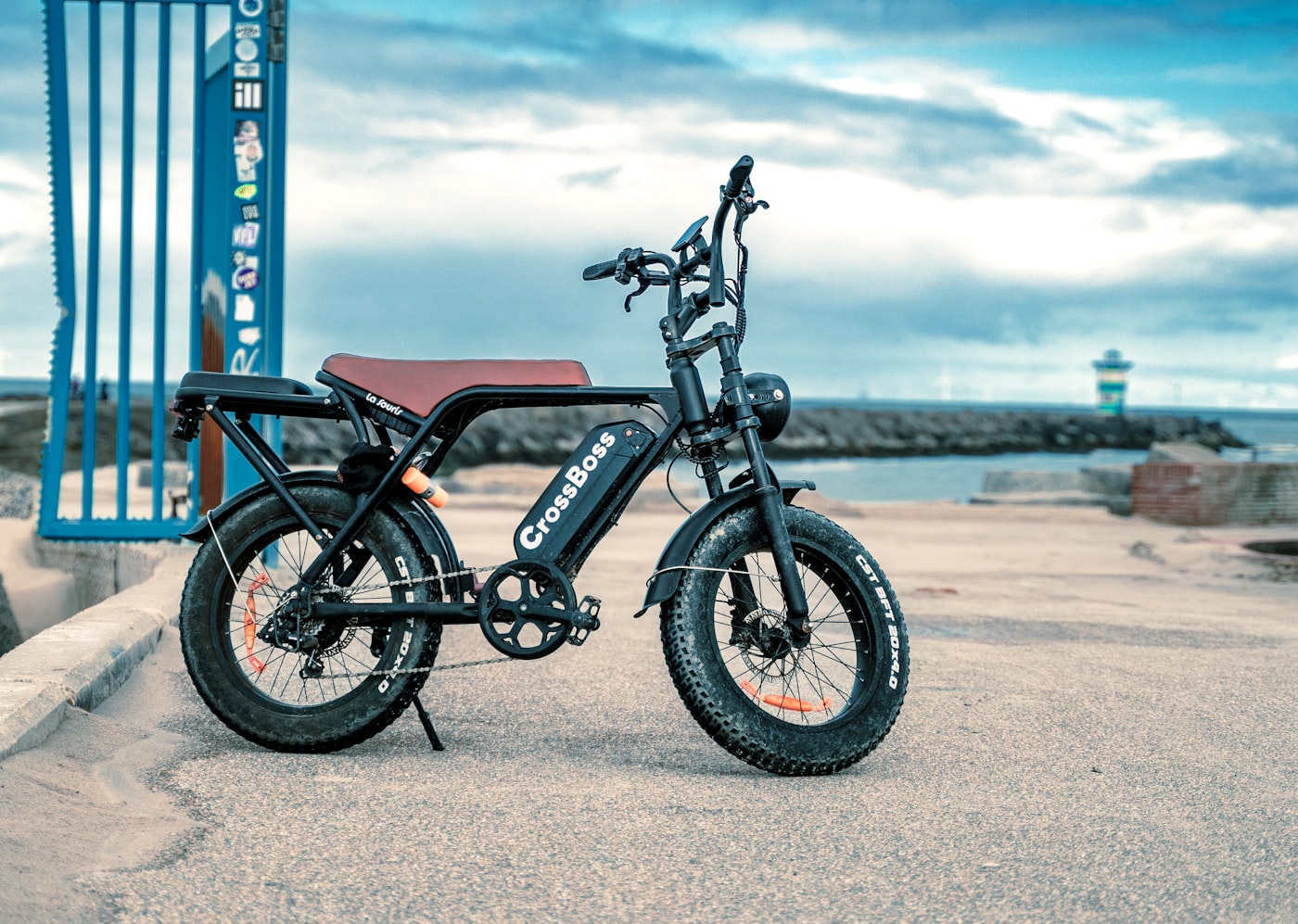
Short answer: A 20ft container holds roughly 250-300 bicycles, a 40ft standard around 450-520, and a 40ft high cube about 500-600, at a conventional 85% assembled packing level, one bike per carton. E-bikes give lower counts, because the container hits its weight limit before the space is full. SKD and CKD packing push a 40ft HQ past those figures, but move assembly labour to your warehouse.
How many bicycles fit in a 20ft, 40ft and 40ft HQ container?
Bicycles are volumetric cargo: you run out of cubic metres long before payload. The exception is e-bikes, where motor and battery make weight the binding constraint. Within each range, wheel size, carton dimensions and loading discipline decide the outcome.
| Container | Internal volume | Bicycles (85% assembled) | Binding constraint |
| 20ft standard | ~33 cbm | 250-300 | Volume |
| 40ft standard | ~67 cbm | 450-520 | Volume |
| 40ft high cube | ~76 cbm | 500-600 | Volume |
| 40ft HQ, e-bikes | ~76 cbm | Materially fewer | Weight, battery rules |
What does 85% assembled mean, and what is CKD?
Assembly level is the biggest lever on density. Three levels dominate export under HS 8712.00 and HS 8711.60:
- 85% assembled: frame, drivetrain and rear wheel fitted, handlebar rotated in line with the top tube, pedals removed and bagged, front wheel usually detached alongside.
- SKD: both wheels off, fork loosened, handlebar and stem separated. Cartons become much flatter, and destination assembly needs a trained mechanic.
- CKD: frames, forks, wheelsets and component kits packed as separate optimised units, several sets per master carton. Densest by far, but it needs a real assembly line and a documented QC step.
| Assembly level | Units per 40ft HQ | Destination labour | Suited to |
| 85% assembled | Baseline 500-600 | 10-15 min, basic tools | Retailers without a workshop |
| SKD | Meaningfully higher | 25-35 min, trained mechanic | Importers with a service centre |
| CKD | Highest by far | 40-60 min, assembly line | Local assemblers, tariff programmes |
Assembly level can also change tariff classification in some markets, so confirm it with your broker before committing to CKD.
How do carton design and component orientation add units?
- Pedals off, always. Pedals are the widest protrusion on an otherwise flat bike, so bagging them to the frame is the cheapest width saving there is.
- Handlebar rotated, not just loosened. Turning the bar parallel to the top tube and dropping the stem removes a lot of dead carton width, and flat bars and drop bars differ.
- Nesting. Alternating bikes head-to-tail puts the wide crank zone of one unit beside the narrow seat-tube zone of the next.
- Correct board grade. Double-wall BC flute only where stack load demands it, with die-cut spacers instead of extra thickness.
Pallets or floor-loaded: which fits more bikes?
Floor loading wins on density every time. A pallet deck costs roughly 145-150 mm of usable height per stack, plus void space around its footprint — close to a full tier on a 40ft HQ. Palletising wins on handling and is often mandatory for 3PL warehouses.
How do you prevent damage in a tightly packed container?
Loosely packed containers usually arrive worse than tightly packed ones: movement does more harm than pressure. Protection is discipline: fork end spacers, disc rotor guards, chainstay protection, corner boards on outer tiers, dunnage bags closing the door-end void. Cartons must be crush-rated for the real stack height, and desiccant belongs on long ocean legs, since condensation rusts rims and spokes.
How do you choose between density and destination labour?
Weigh destination labour rates, annual volume and warranty exposure on locally assembled bikes. Compliance follows the bike to the end user: EN ISO 4210 for city, mountain and road bikes, EN ISO 8098 for children's bikes, EN 15194 and UL 2849 for e-bikes, CPSC 16 CFR 1512 for the US. Under a few thousand units a year, 85% assembled is usually right.
FAQ
How many bicycles fit in a 40ft high cube container?
Around 500-600 bicycles at a standard 85% assembled level, one bike per carton. Kids' bikes and 20-inch folding models sit at the top of that range, 29-inch mountain bikes at the bottom, e-bikes materially lower.
Does CKD packing double the count per container?
Not reliably, but it is by a wide margin the densest option. The number that matters is landed cost per assembled bike, which absorbs destination labour, tooling and QC.
Is it better to floor-load or palletise bicycles?
Floor loading fits more units, because pallets consume height and leave void space around their footprint. Palletising is faster and safer to discharge, and is often required by 3PL warehouses. Choose by who unloads the container.
Do e-bikes change the loading plan?
Yes, on two counts. A 40ft HQ usually reaches its weight limit before it is cubically full, and lithium batteries are regulated cargo needing UN 38.3 test summaries and correct dangerous goods paperwork. Both belong in the loading diagram from the start.
Can one container hold several models plus spare parts?
Yes, and mixed loading is normal. Parts and accessory cartons fill the irregular voids around bicycle tiers, improving density and stability at once. It requires one packing list per SKU and clear carton marking.
Where Source of Bikes fits
Container optimisation only works if the carton drawing, assembly level and loading plan are agreed with the factory before production starts, which is where most first-time importers lose units. We hold long-standing relationships with vetted factories across China's bicycle clusters, match your spec and volume to the right one, inspect 100% before shipment and consolidate FCL or LCL loads.
Send us your model list, target quantity and destination port and we will return a loading plan and a tailored quotation, including how many units your container really holds at each assembly level. Message WhatsApp +8617702000155 or email [email protected], and browse our products page.
